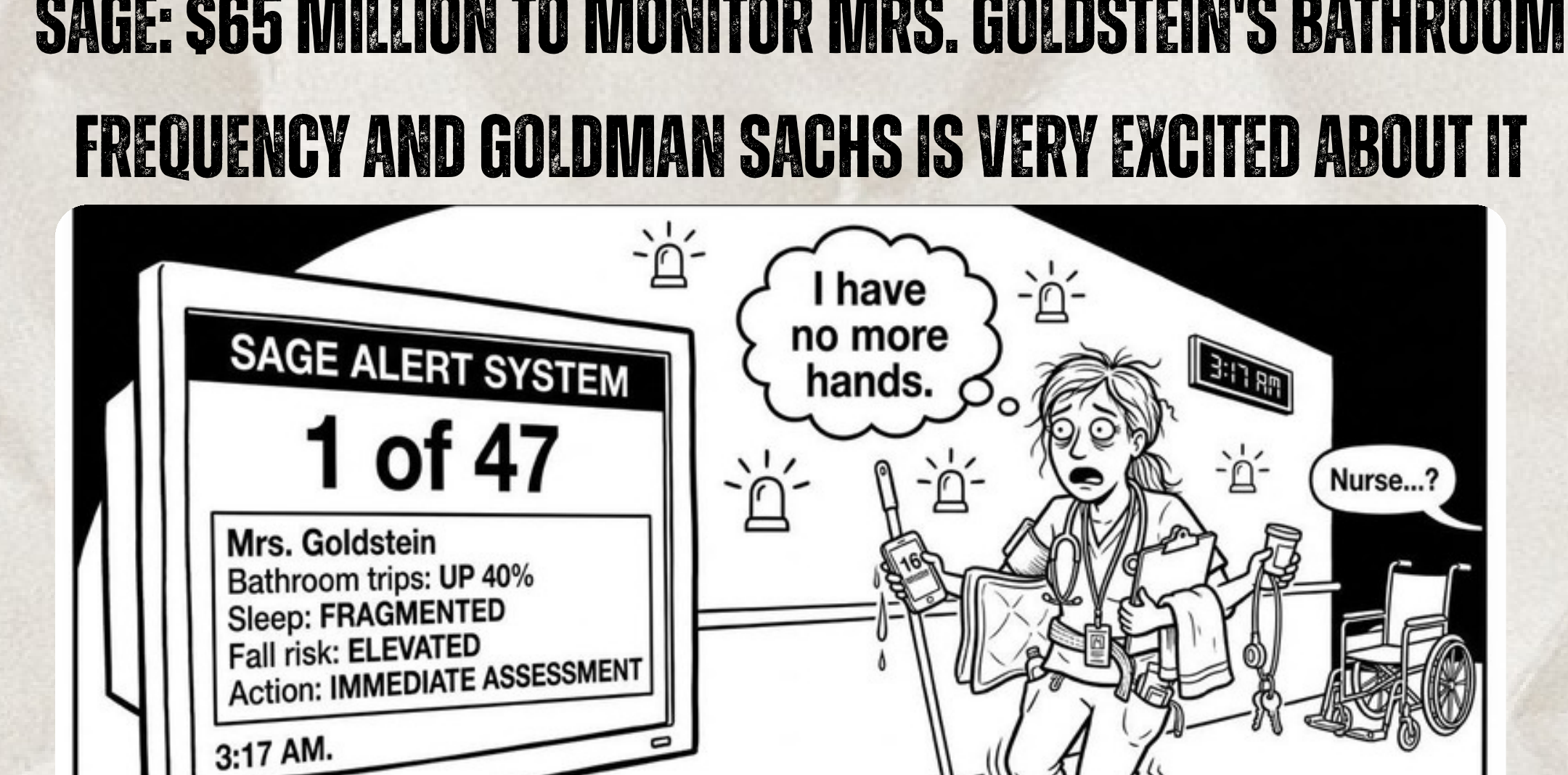
Sage raised $65 million - sixty-five million dollars, led by Goldman Sachs, which means actual serious grown-up institutional money - to build AI that monitors sleep patterns, nighttime wandering, bathroom frequency, and activity levels to predict falls and health declines before they happen.
The numbers they're claiming are staggering: 50% reduction in falls, 50% faster response times, $275 increase in NOI per resident per month. Goldman did not write a $65 million check for a science project. These numbers are probably real somewhere.
The somewhere is the issue.
Somewhere is a Class-A senior living community in Scottsdale where the administrator has an MBA, the WiFi was installed last year, the EHR is current, the night staff has been there for three years, and the maintenance guy actually knows what a router is. In that building, Sage probably works exactly as advertised.
The sensors talk to PointClickCare, the dashboard updates in real time, the night CNA gets an alert that Mrs. Rosenberg's bathroom trips increased 40% and her sleep is fragmented, flags it to the nurse, and a UTI gets caught before it becomes a hospitalization. Beautiful. Genuinely beautiful.
Now let's go to your building.
Your building has sensors from a vendor you bought in 2021 that may or may not still be in business. Your PointClickCare integration hasn't been updated since the last IT guy left.
Your night CNA, God bless her, has been on since 11 PM, is covering eighteen residents by herself because someone called out, and gets approximately forty-seven alerts per shift from the existing system - of which she has learned, through painful experience, to ignore approximately forty-four because they're false positives from the call light someone accidentally knocked off the wall in Room 12. You add Sage's predictive AI to this environment and what you get is alert number forty-eight.